
13 min read
TL;DR: – A 203k work write-up is a HUD-required document that details all repairs, costs, and payment schedules for your renovation loan; it's mandatory for Standard 203k loans but not Limited 203k.
- Consultant fees range from $400 (repairs under $7,500) as detailed in our 203k consultant fee structure breakdown to $1,000 (repairs over $100,000), all financed into your loan – you pay nothing out of pocket.
- The write-up protects you by preventing contractor overpayment, ensuring the lender approves the loan amount, and triggering draw inspections at each phase of work.
Introduction
If you're buying a fixer-upper with an FHA 203k renovation loan in North Carolina, you'll hear the term "work write-up" repeatedly – and for good reason. This document controls whether your loan gets approved, how much you can borrow, and how your contractor gets paid. Yet many borrowers, real estate agents, and even some loan officers don't fully understand what a work write-up actually includes or why each component matters.
Based on HUD Handbook 4000.1 and HUD Mortgagee Letter 2000-25, this guide walks you through every deliverable a 203k consultant produces, what it costs, and how it protects both you and your lender. Whether you're a borrower evaluating consultant fees – see our guide on 203k consultant fees for homebuyers – an agent explaining the process to clients, or a contractor wondering why the consultant's scope differs from your estimate, you'll find concrete answers here.
What Is a 203k Consultant Work Write-Up?
A 203k work write-up is a comprehensive document prepared by a HUD-approved consultant that specifies every repair needed on the property, estimates the cost of each repair, and creates a payment schedule tied to completed work phases. According to HUD Handbook 4000.1, this document is mandatory for all Standard 203k loans – the lender cannot approve your loan without it.
The work write-up serves three critical functions: it validates that the property will meet FHA Minimum Property Requirements after repairs, it establishes the "as-improved value" that determines your maximum loan amount, and it prevents the contractor from being overpaid before work is complete. Without a compliant write-up, your loan stalls in underwriting.
Every work write-up includes five core components:
- Feasibility study: Analysis confirming the renovation is viable and the property will meet FHA standards post-repair
- Specification of Repairs: Detailed description of each repair, materials, and labor costs by trade
- Cost estimate: Line-item breakdown of all repair expenses, including a 10–20% contingency reserve
- Architectural exhibits: Drawings or photos for structural work, electrical upgrades, or complex modifications
- Draw request schedule: Payment phases tied to completed work milestones, inspected by the consultant before each payment release
The consultant's role is to inspect the property thoroughly, interview the contractor about the scope, and produce a document that the lender, appraiser, and underwriter can all rely on to make lending decisions.
Key Takeaway: A 203k work write-up is the legal blueprint for your renovation loan – it controls the loan amount, protects you from contractor overpayment, and is required by HUD for all Standard 203k loans.
What Does the Work Write-Up Service Include Step by Step?
The consultant's work write-up service unfolds in five distinct phases, each building on the previous one. Understanding this sequence helps you know what to expect and when.
Property Inspection and Site Visit
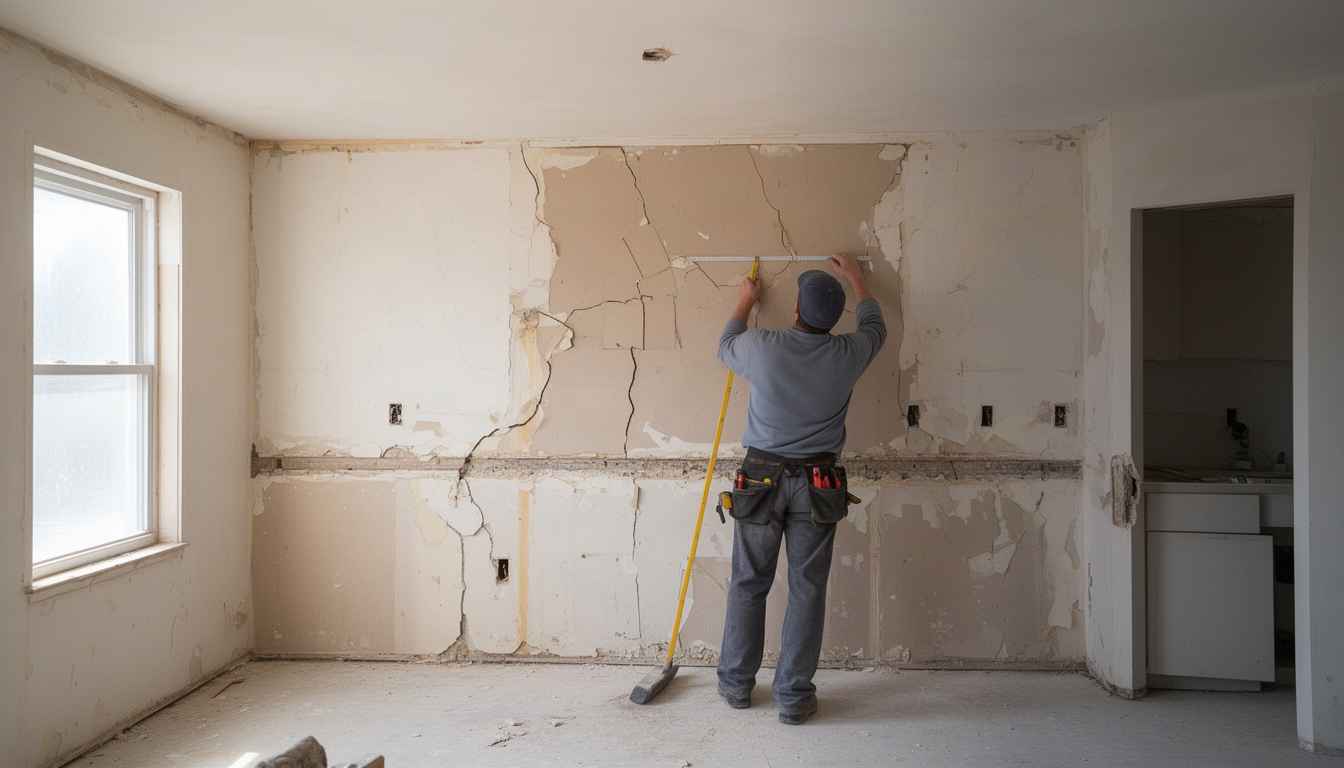
The process begins with an on-site inspection. The consultant visits the property, walks through every room, and evaluates the structural integrity, mechanical systems (heating, plumbing, electrical), roof condition, and compliance with FHA Minimum Property Requirements. According to Property Engineers LLC, the consultant must verify the absence of rodents, termites, and infestations; assess defects affecting health and safety; and evaluate the adequacy of existing systems.
During this visit, the consultant also meets with the contractor (if one is already selected) to discuss the proposed scope of work. The consultant takes photos, measurements, and notes on existing conditions – all of which inform the cost estimate. This inspection typically takes 2–4 hours depending on property size and complexity.
Scope of Work Document and Cost Estimate
After the inspection, the consultant drafts the Specification of Repairs – a detailed list of every repair, organized by trade (roofing, electrical, plumbing, etc.). According to The Reno Gal LLC, each item must include the description or item, make and model number for major components (kitchen cabinets, appliances, HVAC units), and labor and material costs.
The consultant also calculates a contingency reserve – typically 10–20% of total repair costs – to cover unforeseen issues discovered during construction. According to Plaza Home Mortgage, a minimum of 15% contingency is required if utilities are off, the home is uninhabitable, or there is water, mold, or fire damage.
This phase typically takes 3–5 business days and produces a line-item cost estimate that becomes the basis for the loan amount.
Architectural Exhibits and Draw Schedule
For structural work – such as load-bearing wall removal, foundation repair, or roof replacement – the consultant prepares architectural exhibits: drawings, photos, or engineer reports that show what will be done and why. These exhibits are required by the lender and appraiser to understand complex modifications.
The consultant also creates a draw request schedule that breaks the total repair cost into 2–5 payment phases. According to Bald Eagle Inspection Services, usually two draw inspections are required as a minimum, though up to five draws are permitted on Standard 203k loans. Each draw is tied to a specific phase: foundation work, framing, mechanical rough-in, drywall/finish, and final inspection.
The draw schedule prevents the contractor from receiving full payment upfront; instead, the lender holds funds in an escrow account and releases them only after the consultant inspects completed work.
Key Takeaway: The work write-up service spans 5–10 business days and produces five interconnected documents: feasibility study, scope, cost estimate, architectural exhibits (if needed), and draw schedule – all required for loan approval.
How Much Do 203k Consultant Work Write-Up Services Cost?
HUD establishes maximum allowable fees for 203k consultants on a sliding scale based on repair cost. According to HUD Mortgagee Letter 2000-25, these are the fee caps:
| Repair Cost Range | Maximum Consultant Fee |
|---|---|
| Up to $7,500 | $400 |
| $7,501–$15,000 | $500 |
| $15,001–$30,000 | $600 |
| $30,001–$50,000 | $700 |
| $50,001–$100,000 | $800 |
| Over $100,000 | $1,000 |
Example: You're buying a home with $45,000 in needed repairs. The HUD fee cap is $700. This fee is financed into your 203k loan – you don't pay it out of pocket at the time of engagement. Instead, it's added to your total loan amount and paid back over the life of the mortgage.
Draw inspection fees are charged separately. According to Bald Eagle Inspection Services, draw inspections cost up to $375 per draw request. With four draws on your renovation, you'd pay $600–$1,400 in draw inspection fees, also financed into the loan.
Real-world math: $45,000 renovation + $700 write-up fee + ($250 × 4 draws) = $46,700 total financed into your loan. You pay $0 out of pocket for consultant services.
According to Plaza Home Mortgage, the consultant may also charge up to $120 per change order request and $225 for re-inspection if the scope changes during construction. These fees are also financeable.
Key Takeaway: A $45,000 renovation costs $700 in consultant fees (HUD cap) plus $600–$1,400 in draw inspections – all rolled into your loan. You finance the full cost; no upfront payment required.
Why Does the Work Write-Up Protect the Borrower and Lender?
The work write-up is not bureaucratic overhead – it's a risk-management tool that protects you in three concrete ways.
First, it validates the loan amount. The appraiser uses the consultant's feasibility study and scope to determine the "as-improved value" of the property. If the write-up is vague or incomplete, the appraiser cannot confidently estimate post-repair value, which means the lender cannot approve the full loan amount you need. According to HUD Handbook 4000.1, an incomplete specification of repairs will limit the appraiser's ability to determine value. A weak write-up directly reduces your borrowing power.
Second, the draw schedule prevents contractor overpayment. According to Bald Eagle Inspection Services, after the 4th draw request, a punch list containing any unfinished, outstanding tasks is handed down by the consultant to the contractor. The contractor cannot claim final payment until all work is complete and inspected. This protects you from paying for work that was never finished.
Third, the consultant's draw inspections protect you from paying for substandard work. Before each payment release, the consultant visits the site and verifies that the completed work meets the scope and quality standards outlined in the write-up. If the contractor cut corners or deviated from the plan, the consultant flags it and the lender withholds payment until corrections are made.
According to HUD's 203k FAQ, if the work write-up is incomplete or inaccurate, the lender must require the consultant to correct or update the document before the loan can proceed to underwriting. A deficient write-up – such as missing architectural exhibits for structural work – causes underwriting suspension, adding 2–4 weeks to your closing timeline.
Key Takeaway: The work write-up protects you by ensuring the lender approves the full loan amount you need, preventing contractor overpayment, and triggering inspections that verify quality work before payment is released.
How to Choose a Qualified 203k Consultant for Write-Up Services
Not every contractor or home inspector can legally produce a 203k work write-up. HUD maintains an approved consultant roster, and your lender is required to use only consultants on that list.
Verify HUD Roster Status
Before hiring, search the HUD Lender List and select "203k Consultant" from the institution type dropdown. Confirm the consultant's name, state, and active status. An unlicensed practitioner producing a non-compliant write-up can void your loan approval entirely.
Ask These Five Vetting Questions
- Are you currently on the HUD 203k Consultant Roster? (Confirm via the search tool above.)
- Will you perform an on-site inspection, or do you work from photos/contractor estimates? (Red flag: consultants who skip site visits produce weak write-ups.)
- Do you include architectural exhibits for structural work? (Red flag: consultants who omit exhibits cause underwriting rejection.)
- What is your typical turnaround time from inspection to completed write-up? (Benchmark: 5–10 business days.)
- What is your fee, and does it fall within HUD's maximum for my repair cost? (HUD caps exist for a reason; be wary of consultants charging significantly above the cap.)
Red Flags to Avoid
- Consultants who are not on the HUD Roster
- Consultants who do not perform site visits
- Consultants who skip architectural exhibits for structural work
- Consultants who charge flat fees that skip the feasibility study or draw schedule
- Consultants who pressure you to use a specific contractor
According to HUD, to be eligible for the roster, individuals must be a state-licensed architect with proof of current license, have at least 3 years of experience as a remodeling contractor or general contractor or proof of current license if required by state, or have at least 3 years of experience as a home inspector or proof of current license if required by state. Verify credentials before engagement.
For North Carolina borrowers looking to hire a 203k consultant for a fixer-upper in NC, 203k Online is a HUD-approved consulting firm offering feasibility reviews, lender-approved work write-ups, and draw inspections. The firm is led by Mike Young, a HUD-certified consultant (roster #S0289), and provides transparent, compliant documentation tailored to North Carolina properties and lenders.
Key Takeaway: Verify HUD Roster status, ask about site visits and architectural exhibits, and confirm turnaround time before hiring. A qualified consultant will be transparent about credentials and process.
Standard 203k vs. Limited 203k: Does the Write-Up Requirement Change?
This is a common source of confusion. The answer depends on which 203k program you're using.
Standard 203k requires a HUD-approved consultant and a full work write-up. Repairs can exceed $35,000, and structural work is permitted. The consultant must produce all five components: feasibility study, scope, cost estimate, architectural exhibits (where needed), and draw schedule.
Limited 203k (also called Streamline 203k) does not require a HUD-approved consultant or full work write-up. According to Evergreen Property Inspectors, a Limited 203K Loan is for less extensive renovations that cost under $35,000. Instead of a consultant write-up, the lender uses a simplified Specification of Repairs form completed by the borrower and contractor.
When Should You Hire a Consultant for Limited 203k?
Even though Limited 203k doesn't require a consultant, you should consider hiring one if:
- Repairs exceed $20,000 (complexity increases risk)
- The scope includes structural work (even if you're trying to stay under $35,000, structural work disqualifies Limited 203k)
- You're unfamiliar with renovation projects and want professional guidance
- The lender recommends one
| Aspect | Standard 203k | Limited 203k |
|---|---|---|
| Consultant Required? | Yes, HUD-approved | No |
| Repair Cost Limit | No limit | $35,000 max |
| Structural Work Allowed? | Yes | No |
| Work Write-Up Required? | Yes, full document | No, simplified form |
| Draw Inspections | Up to 5 | Up to 2 |
| Draw Inspection Fees | $150–$350 each | $150–$350 each |
Key Takeaway: Standard 203k requires a full consultant write-up; Limited 203k does not. However, for repairs over $20,000 or structural work, hiring a consultant is advisable even on Limited 203k to avoid underwriting delays.
Frequently Asked Questions About 203k Work Write-Up Services
How much does a 203k consultant work write-up service cost in 2026?
Direct Answer: According to HUD Mortgagee Letter 2000-25, the maximum consultant fee ranges from $400 (repairs under $7,500) to $1,000 (repairs over $100,000), depending on repair cost. These fees are financed into your loan, not paid out of pocket.
In practice, consultants may charge anywhere from $400 to the HUD maximum for your repair tier. Ask your consultant upfront what they charge and confirm it doesn't exceed the HUD cap for your project size. Draw inspection fees ($150–$350 per inspection) are charged separately and are also financeable.
How long does it take to receive the completed 203k work write-up?
Direct Answer: Turnaround is typically 5–10 business days from the site inspection, though complex projects with structural work may take longer.
The timeline depends on how quickly the consultant can schedule the inspection, how detailed the scope is, and whether the contractor is available to discuss the work. Once you've selected a consultant, ask for a specific delivery date in writing. Delays in the write-up directly delay your loan closing.
Can the 203k consultant fee for the write-up be financed into the loan?
Direct Answer: Yes. According to HUD Handbook 4000.1, all 203k consultant fees – including the work write-up fee and draw inspection fees – are eligible costs that may be included in the mortgage amount.
This means you don't pay the consultant upfront. Instead, the fee is added to your total rehabilitation cost, and you finance it over the life of your mortgage. This is one of the key advantages of 203k loans: you can afford professional guidance without a large out-of-pocket expense.
What is the difference between a 203k work write-up and a standard home inspection report?
Direct Answer: A standard home inspection identifies defects and safety issues; a 203k work write-up specifies which repairs are required by HUD, estimates their cost, and creates a payment schedule for the lender.
A home inspector may tell you the roof is failing; a 203k consultant tells you the roof replacement will cost $8,500, must be completed before occupancy, and will be paid in draw #2 after framing is complete. The work write-up is a financing document, not just a diagnostic report. It's required by HUD and the lender; a standard inspection is not.
Do Limited 203k loans require a consultant work write-up?
Direct Answer: No. Limited 203k loans do not require a HUD-approved consultant or full work write-up. Instead, the lender uses a simplified Specification of Repairs form.
However, if your repairs exceed $20,000 or include structural work, hiring a consultant is advisable to avoid underwriting delays and ensure compliance with FHA standards.
What happens if the contractor disagrees with the consultant's cost estimate in the write-up?
Direct Answer: The consultant's estimate controls the loan amount. If the contractor's bid is higher, the difference must come from your own funds or the scope must be reduced.
The lender uses the consultant's cost estimate to determine the maximum loan amount. If the contractor later bids higher, you have three options: (1) pay the difference out of pocket, (2) reduce the scope of work, or (3) request a change order and have the consultant revise the estimate (which may require lender approval and adds time and cost).
How many draw inspections does a 203k consultant typically perform after the write-up is complete?
Direct Answer: According to Bald Eagle Inspection Services, usually two draw inspections are required as a minimum on Standard 203k loans. Up to five draws are permitted, though most projects use 3–4 draws.
Each draw inspection costs $150–$350 and is financed into your loan. The consultant inspects completed work before the lender releases payment to the contractor, ensuring quality and preventing overpayment.
Recommended Local 203k Consultant Services in North Carolina
If you're a North Carolina homebuyer or real estate agent navigating the 203k process for the first time, finding a qualified, responsive consultant is critical to closing on time and avoiding underwriting delays.
203k Online is a HUD-approved consulting firm serving North Carolina borrowers. Led by HUD-certified consultant Mike Young (roster #S0289), the firm specializes in:
- 203k feasibility reviews: Pre-purchase analysis to determine if a property qualifies for 203k financing and what repairs are required
- Lender-approved work write-ups: Complete documentation including feasibility study, scope, cost estimate, architectural exhibits, and draw schedule
- 203k draw inspections: On-site verification at each payment phase to ensure work quality and prevent contractor overpayment
What sets 203k Online apart is transparency about the process and fees. The firm explains what each deliverable means, why HUD requires it, and how it protects your loan. For North Carolina borrowers, having a local consultant who understands regional building codes, contractor practices, and lender preferences can significantly reduce closing delays.
Learn more about 203k Online's services at https://203konline.com.
Ready to Get Started?
For personalized guidance, visit 203k Online to learn how we can help.
Conclusion
A 203k work write-up is far more than a bureaucratic requirement – it's the financial and legal foundation of your renovation loan. It controls the loan amount you can borrow, prevents contractor overpayment, and triggers inspections that protect you from paying for substandard work.
Understanding what the write-up includes, what it costs, and why each component matters puts you in control of the 203k process. You'll ask better questions of consultants, catch red flags early, and avoid the underwriting delays that plague borrowers with incomplete or deficient write-ups.
If you're ready to move forward with a 203k loan in North Carolina, start by verifying your consultant's HUD Roster status, confirming they perform on-site inspections, and asking for a clear timeline and fee quote. A qualified consultant will be transparent about the process and deliver a compliant write-up that your lender accepts on the first submission – keeping your closing on track.
More from 203k Online: FHA 203k Consulting services · the areas we serve